

The human-centered systems lab (h-lab) headed by Prof. Dr. Alexander Maedche (Research Group Information Systems I) at the Institute for Information Systems (WIN) focuses in research, education, and innovation on designing human-centered systems for better work and life.
Our mission is to create impactful knowledge to design human-centered systems for productivity and well-being through relevant and rigor scientific research. We build on (generative) artificial intelligence (AI) and biosignal sensor technologies in our research and follow a human-centered design process. We pursue a socio-technical research paradigm and combine empirical and design science research.
We contribute to the fields of human-computer interaction (HCI) (Mensch-Computer Interaktion) and information systems (IS) (Wirtschaftsinformatik). We believe that delivering cutting-edge knowledge and inspiring education, as well as an ongoing dialog with the public need to go hand in hand to maximize the impact of our work in organizations and society.


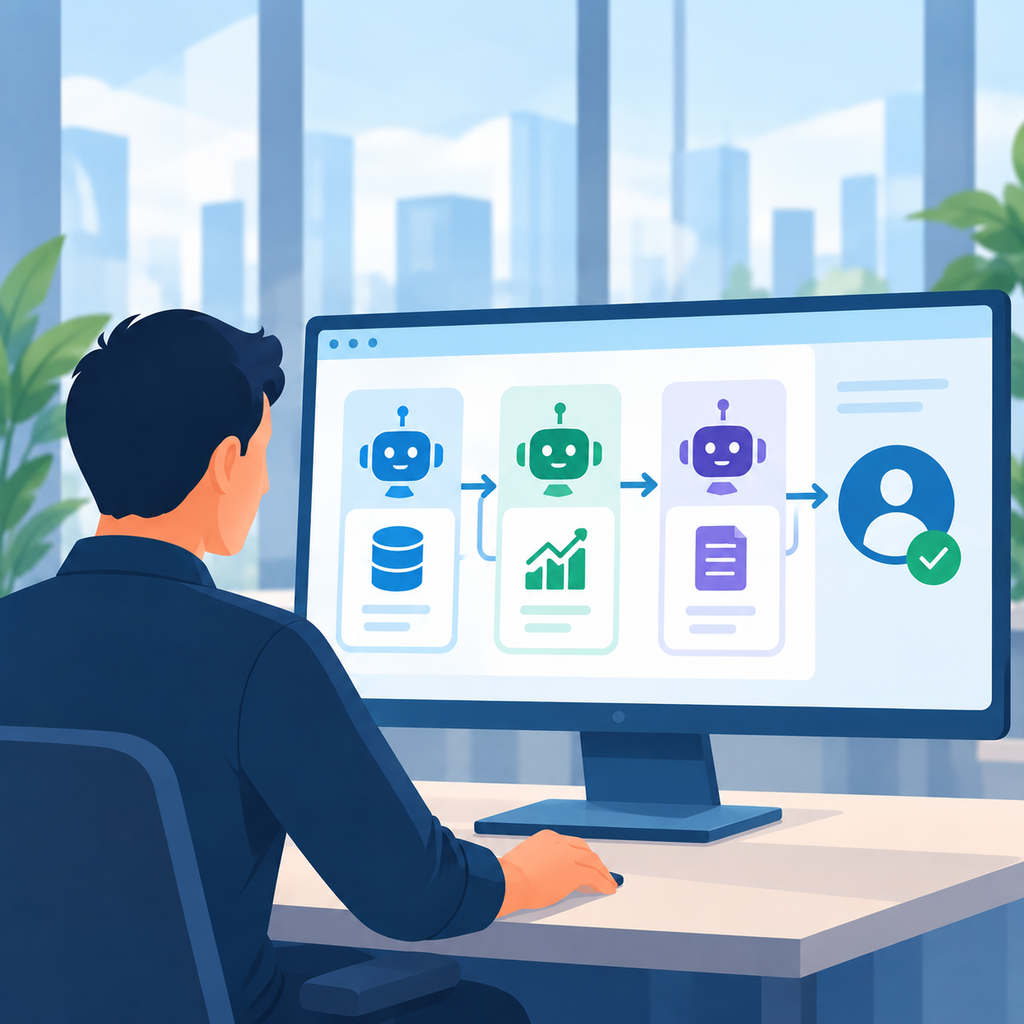


SAP SE invites KIT students to the SAP Student Day, an exclusive onsite event at the SAP Headquarters that combines career insights, inspiring conversations, and a look behind the scenes. The event takes place on Friday, November 20, 2026 - starting at 10:00 a.m. in Walldorf. Learn more about career opportunities, AI, and learning options for students at SAP. Meet SAP employees, make connections, and join a guided campus tour. Further information is available here.
More
On October 19th 2026, Prof. Mädche handed over the three IS scholarships funded Schwarz Digits to the KIT information systems students Emilia Frey, Till Schreiner and Nils Menzel. For the 2026/27 period, seven information systems (IS) scholarships were awarded by the non-profit association "Die Wirtschaftsinformatik e.V." at Karlsruhe Institute of Technology (KIT) supporting students of the Information Systems program. The scholarship serves to promote young people, it runs for 12 months and supports scholarship holders with 300 Euros per month. The scholarship is funded by companies that provide the financial support.
More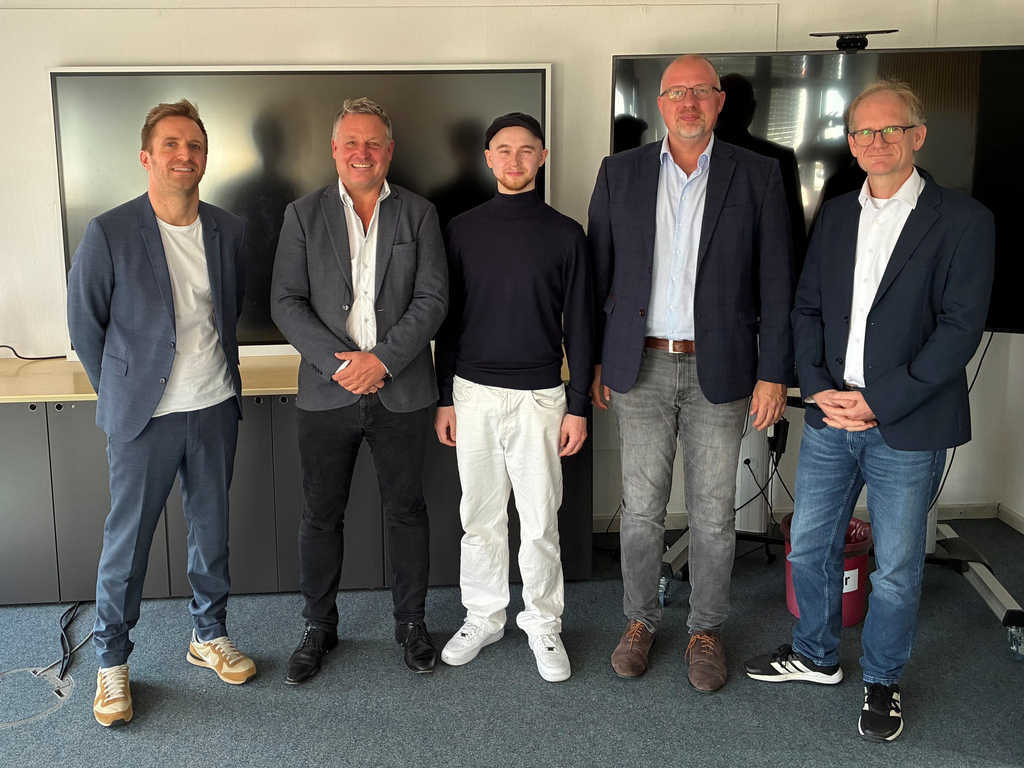
Leon Hanschmann successfully defended his PhD thesis, “Designing LLM-based Conversational Agents for Mental Health,” on October 12, 2026. His research advances digital mental health by exploring safe development and testing methods, the effects of compassion and embodiment on therapeutic outcomes, and user-centered design principles for conversational agents. We congratulate Leon on this achievement!
More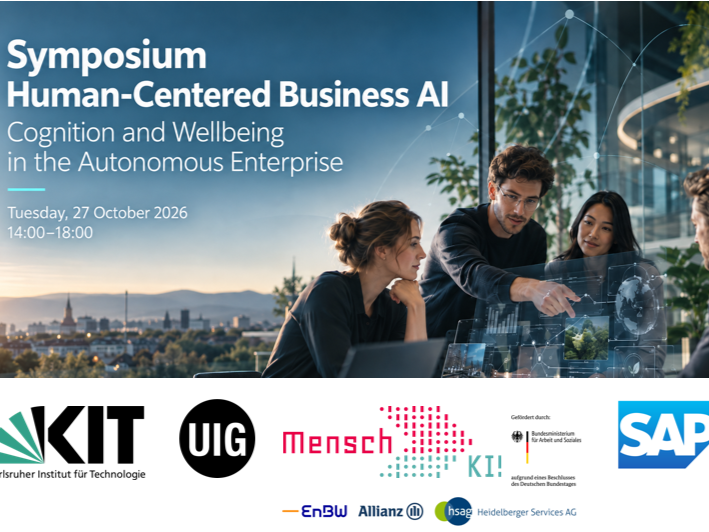
The Institute for Information Systems (WIN) is co-organizing the symposium “Human-Centered Business AI – Cognition and Wellbeing in the Autonomous Enterprise” with MenschKI! project partners and SAP on 27 October 2026 in Karlsruhe. The symposium explores how autonomous AI systems can balance performance with human cognition and wellbeing, featuring research talks, industry use cases, posters, and networking. Participation is free, with limited seats available.
More
Research by Adrian Wegener from the human-centered systems lab (h-lab) in collaboration with colleagues from Brasil, Saudi Arabia and USA has received the Best Technical Paper Award at the 23rd International Web for All Conference (Web4All-2026). In their paper, “Fidgeting in the Browser: An Empirical Study of a Virtual Self-Regulation Tool for ADHD,” the team worked with people with ADHD in a co-design process to develop a virtual fidget spinner offered as a browser plugin.
More_rdax_98.png)
This industry-based doctoral position is offered in cooperation between the Human-Centered Systems Lab and Atruvia AG, the central IT and digitalization partner of the German Volksbanken and Raiffeisenbanken. The research focuses on innovative conversational banking solutions using agentic AI and knowledge graphs. The doctoral project is rooted in Information Systems, with interdisciplinary links to Human-Computer Interaction and Artificial Intelligence.
More
Svenja holds a B.A. degree in Business Administration from Hochschule Düsseldorf and an M.Sc. degree in Business Information Systems from the University of Göttingen. During her studies and her work as a student researcher, she gained experience in human-centered information systems research, particularly in the areas of human-AI interaction and digital well-being. In her master's thesis, she investigated how users make sense of algorithmically curated social media feeds in the context of food- and body-related content.
More
Mental health chatbots are increasingly used to support people with depressive symptoms, and large language models (LLMs) make these systems more flexible than rule-based chatbots. A new study by Florian Onur Kuhlmeier, Leon Hanschmann, Melina Rabe, Stefan Lüttke, Eva-Lotta Brakemeier, and Alexander Maedche, published in the Journal of Medical Internet Research (JMIR) Mental Health , evaluates how well a GPT-4o–based chatbot delivered a behavioral activation intervention for young people with depression using sessions with artificial users and clinical expert assessment.
More
We are preparing a proposal for a DFG Priority Programme on biosignal-based hybrid intelligence (SYMBIO). The program focuses on how to achieve a symbiosis between humans and AI that balances autonomy, competence, and performance. The program aims to investigate and design human-AI collaboration systems that capture human states based on biosignals - and use this information to decide when the AI should hold back, provide support, or actively call upon human expertise.
More4x3_rdax_98s.jpg)
In this summer semester 2026, M.Sc. students of KIT engaged as part of the lecture “Designing Interactive Systems: Human-AI Interaction” in a joint capstone project in collaboration between EnBW’s "Digital & Operations" division and the KIT Institute for Information Systems (WIN).
More
We are pleased to congratulate Dr.-Ing. Martin Feick and Dr. Felix Kretzer on receiving the Early Career Teaching Award from the KIT Department of Business and Economics for their M.Sc. course Engineering Interactive Systems: AI & Wearables. The award recognizes outstanding teaching by early-career researchers. The course combines wearable sensing, AI, and human-centered design with hands-on project work in collaboration with industry. The redesigned course achieved the maximum Teaching Quality Index (LQI) of 100 and an overall evaluation grade of 1.33.
More
UIG e.V. has published the results of the first nationwide survey of citizens regarding the user-friendliness of digital services in cities. The survey was conducted in collaboration with the Institute of Information Systems (WIN).
Digital services have long been a part of everyday life for citizens. Municipal appointments are booked online, applications are prepared digitally, waste collection schedules are accessed via apps, and doctor's appointments are arranged digitally. A systematic nationwide study has now been conducted for the first time to assess how user-friendly these services are actually perceived by citizens.
More