

Privacy Notices Are Broken—Adaptive Design Offers a Solution
Disclaimer: The following text was generated with support from a generative artificial intelligence tool (Qwen3.5 397B A17B) and has been checked by the first author, Tobias Dehling, for validity of claims made and congruence with the original research paper.
The Problem We All Face
You've seen them everywhere. Those long, confusing privacy policies that pop up whenever you download an app, sign up for a service, or visit a website. They're filled with legal jargon, stretch on for pages, and almost nobody reads them. Yet we all click "I Agree" and move on.
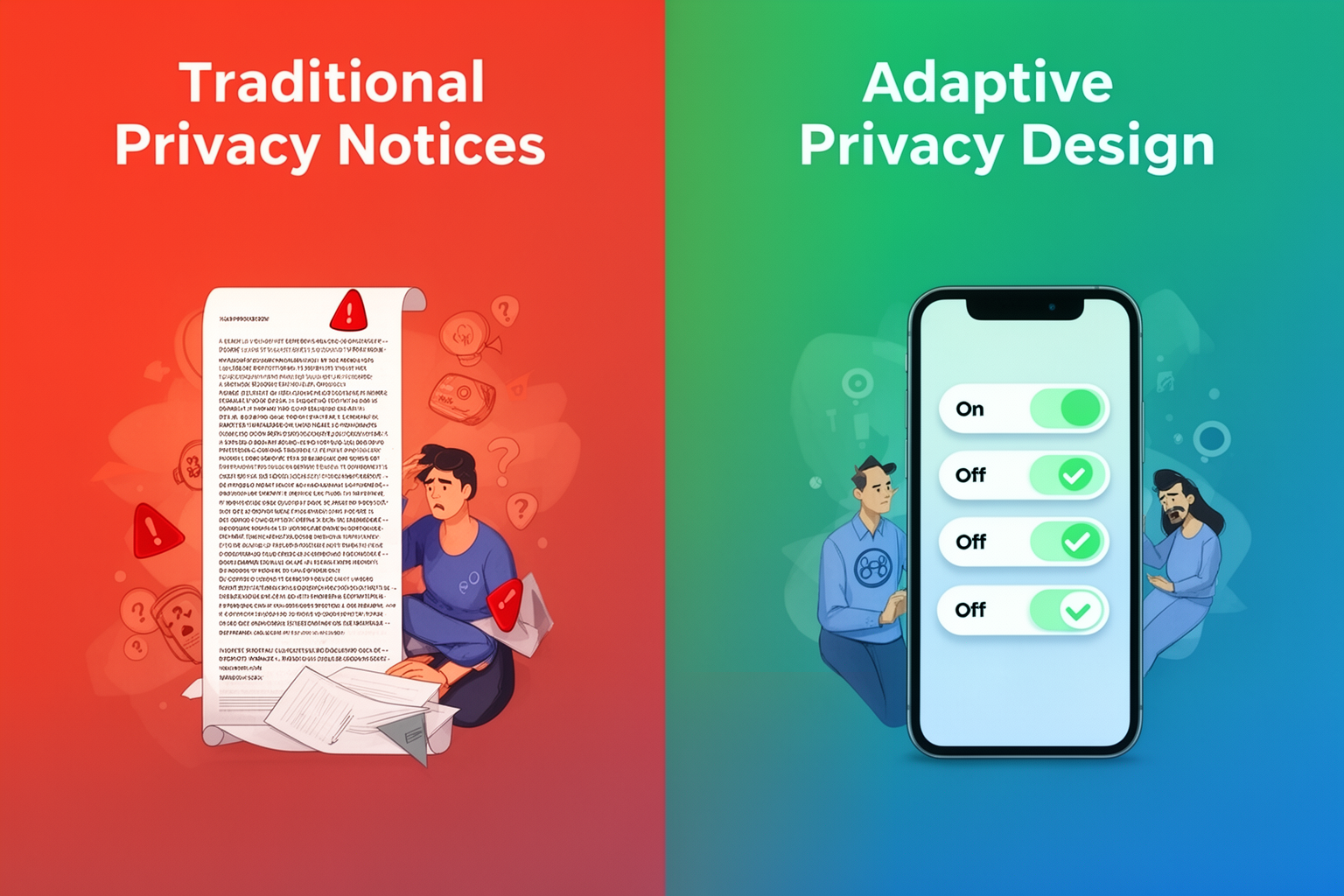
Here's the uncomfortable truth: privacy notices, as they exist today, don't work. They were designed for a simpler time, before our digital lives became so complex. Now, they've become obstacles rather than protections—documents that check legal boxes without actually helping people understand how their information is being used.
But what if there was a better way? What if technology itself could be designed to make privacy clear, accessible, and meaningful?
New research points toward a solution called TIPP theory (Transparency of Information Privacy Practices). Developed by researchers Tobias Dehling and Ali Sunyaev, this approach doesn't just tweak existing privacy notices—it reimagines how transparency should work from the ground up.
Why Current Privacy Notices Fail
To understand why we need change, let's look at what's wrong with the current system.
They're Too Long to Read
Imagine trying to read every privacy notice you encounter in a year. Researchers estimate this would take the average person between 181 and 304 hours—that's more time than most people spend on vacation. No wonder we skip them.
They're Written in Legal Language
Phrases like "data processing for analytics and third-party sharing" don't mean much to most people. Privacy notices are written to protect companies legally, not to inform users clearly.
They Don't Match Your Needs
Your privacy concerns depend on who you are and what you're doing. A parent sharing family photos has different needs than a professional handling confidential work documents. Yet every user gets the same generic notice.
They Never Change
Privacy notices are static documents. They don't adapt when your situation changes, when new features are added, or when risks emerge. You agree once, and that's it—until the next lengthy update you'll likely ignore.
The Real Cost of Broken Privacy Notices
This isn't just about inconvenience. When people can't understand how their data is used, several problems emerge:
- Loss of Control: You can't make informed choices about your information if you don't know what's happening to it.
- Privacy Fatigue: When managing privacy feels impossible, people stop trying. They share data recklessly or abandon useful services altogether.
- Eroded Trust: Every data scandal, every hidden tracking practice, every surprise data breach chips away at confidence in technology.
- Power Imbalance: Companies know exactly how they use your data. You don't. This imbalance makes genuine consent nearly impossible.
The result is a digital world where convenience comes at the cost of clarity, and where trust in technology continues to decline.
A New Approach: Adaptive Transparency
TIPP theory proposes something different. Instead of asking users to adapt to complex privacy notices, it asks systems to adapt to users. The core idea is simple: transparency should be adaptive, not static.
What Does Adaptive Mean?
Think about how your favorite apps already adapt to you. Your music service learns your taste. Your map app adjusts routes based on traffic. Your news feed shows stories relevant to your interests.
Now imagine privacy working the same way. Instead of one massive document, you'd receive targeted information based on:
- What you're doing (shopping, banking, socializing)
- What data is involved (location, health, financial)
- What decisions you need to make (opt-in, opt-out, adjust settings)
- When you need to know (before sharing, during use, after changes)
Two Key Principles
TIPP theory rests on two interconnected ideas:
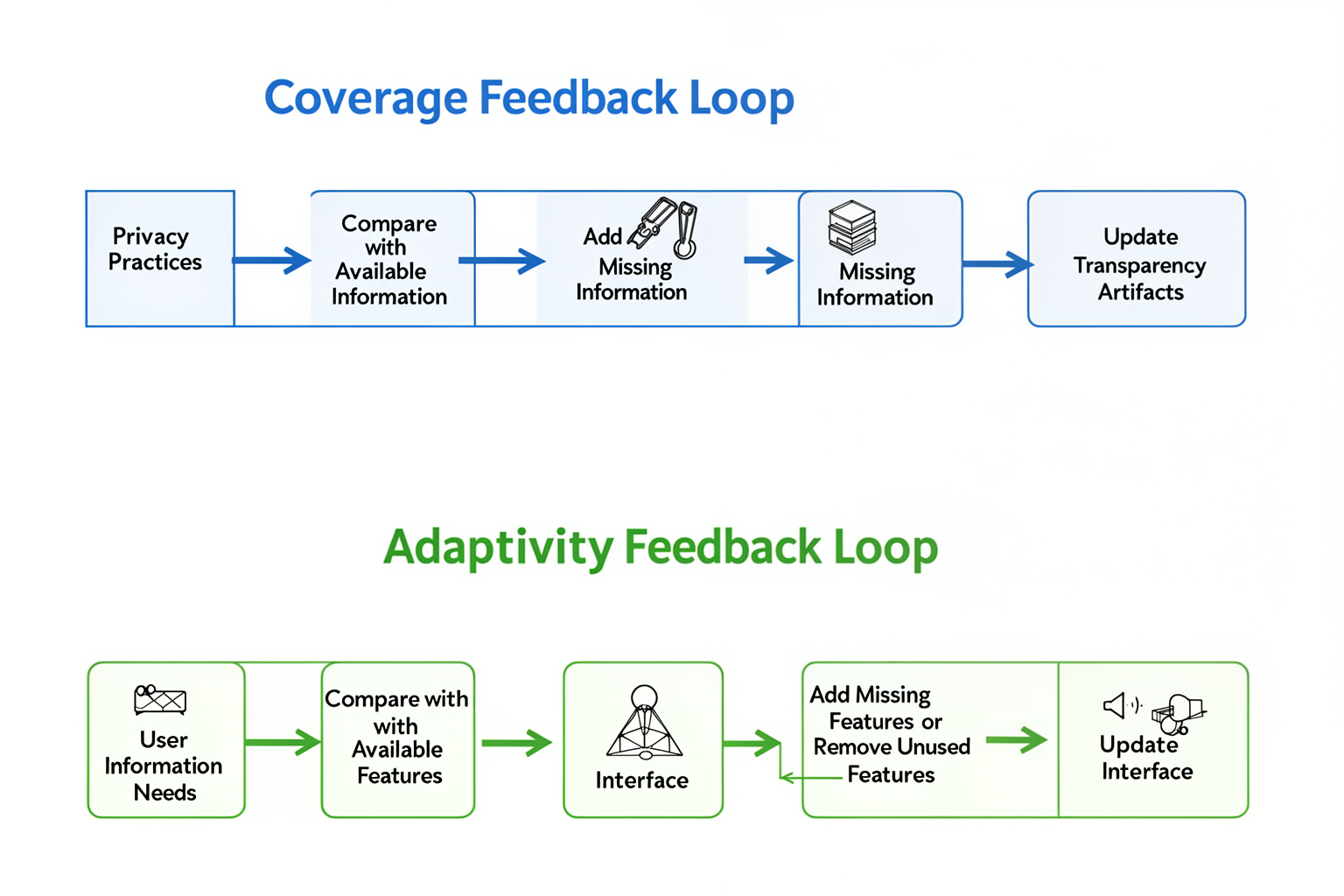
- Coverage: All relevant privacy practices should be documented and available. Nothing important should be hidden or omitted.
- Adaptivity: Information should be presented in ways that match users' current needs and contexts. One size does not fit all.
Together, these principles create systems where transparency is both comprehensive and usable—a combination current privacy notices fail to achieve.
What This Looks Like in Practice
Let's explore how adaptive transparency might change everyday digital experiences.
Signing Up for a New App
Today: You're presented with a wall of text. You scroll past it and click "Agree."
With Adaptive Design: The app asks a few simple questions during signup:
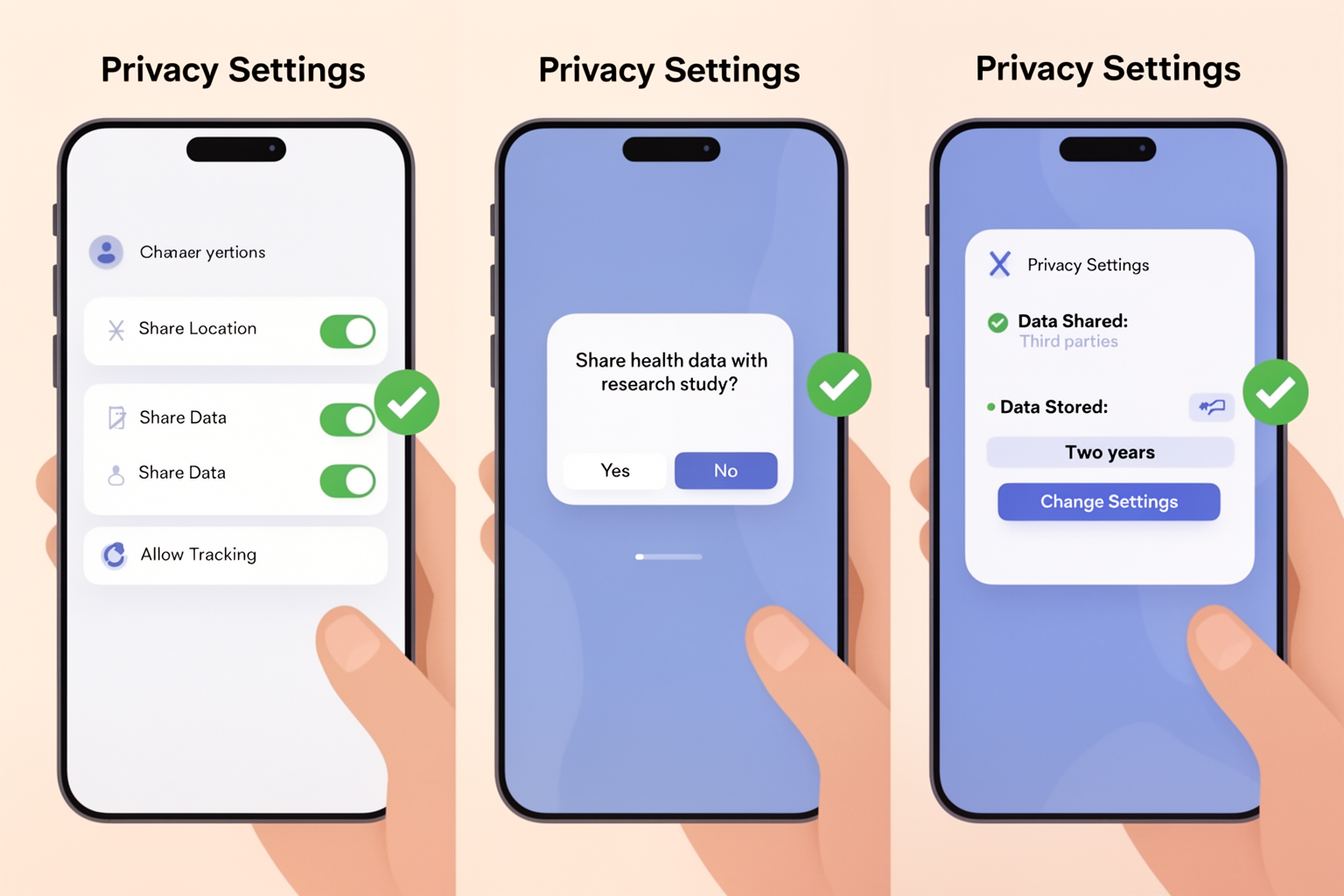
• "Do you want to share your location with friends?"
• "Should your activity be visible to other users?"
• "Do you allow data to be used for personalized ads?"
Based on your answers, the app shows only the policies that matter to your choices. Changes later trigger specific notifications, not blanket updates.
Using a Health Tracking App
Today: Your health data may be shared with researchers, advertisers, or insurers. You find out later, if ever.
With Adaptive Design: Before any data sharing occurs, you receive a clear notification:
"This heart rate data will be shared with a research study. Purpose: Understanding cardiovascular health. Opt out?"
You can approve, deny, or adjust settings instantly. The app remembers your preferences for similar situations.
Shopping Online
Today: Your purchase history is collected and sold. Marketing follows you across the web. You have limited visibility or control.
With Adaptive Design: At checkout, you see:
"Your purchase data may be used for recommendations. Third parties: None. Retention: 2 years. Change settings?"
A simple dashboard lets you review and adjust data practices anytime, not just during signup.
How Systems Would Stay Accurate
One concern with any transparency system is accuracy. How do we ensure what's promised matches what actually happens?
Adaptive design includes built-in checks:
- Internal Monitoring: Systems automatically track whether actual data practices match stated policies. Discrepancies trigger alerts for correction.
- Regular Audits: Independent reviews verify that transparency artifacts reflect real operations, not just marketing claims.
- User Feedback: People can report mismatches between what they're told and what they experience. This creates accountability from the bottom up.
These mechanisms ensure transparency remains truthful, not just theoretical.
What This Means for You
If adaptive transparency becomes standard, here's what changes in your digital life:
- More Control: You decide what data is shared, with whom, and under what conditions. Settings are accessible, not buried.
- Less Confusion: Information arrives when you need it, in language you understand. No more decoding legal documents.
- Fewer Surprises: Changes to data practices trigger clear notifications. You're informed before things shift, not after.
- Restored Trust: When companies are transparent by design, trust becomes possible again. You can use technology without constant worry.
- Better Choices: Clear information lets you compare services based on privacy practices, not just features or price. Privacy becomes a factor in decision-making.
Challenges Ahead
No solution is perfect. Adaptive transparency faces real hurdles:
- Implementation Complexity: Building adaptive systems requires more effort than posting a static policy. Companies must invest in infrastructure and design.
- Consistency Across Services: If every app handles transparency differently, users face new confusion. Standards and best practices will help.
- Balancing Detail and Simplicity: Too much information overwhelms. Too little misleads. Finding the right balance requires ongoing refinement.
- Evolving Expectations: Privacy concerns change as technology advances. Adaptive systems must evolve alongside societal norms.
These challenges aren't reasons to avoid change—they're considerations for getting it right.
The Bigger Picture
Privacy notices were created for a different era. They assumed people had time to read, expertise to understand, and power to negotiate. None of these assumptions hold true today.
Adaptive transparency acknowledges reality: people live busy lives, technology is complex, and power imbalances exist. Instead of fighting these facts, it designs around them.
This isn't just about better notices. It's about rebuilding the relationship between people and technology. When transparency works, trust follows. When trust exists, innovation flourishes. When innovation serves people genuinely, everyone benefits.
What You Can Do Now
While adaptive transparency spreads, you're not powerless:
- Use Privacy-Focused Tools: Services like DuckDuckGo, Signal, and ProtonMail prioritize clarity and control by default.
- Review Settings Regularly: Check app permissions on your devices. Turn off what you don't need.
- Ask Questions: Contact companies about their data practices. Demand clearer explanations.
- Support Better Regulations: Advocate for laws requiring adaptive, user-centered transparency—not just compliance checkboxes.
- Share Knowledge: Help others understand privacy issues. Collective awareness drives collective change.
The Path Forward
Privacy doesn't have to be a battleground between convenience and protection. Adaptive design shows a third way: technology that respects users while delivering value.
The question isn't whether change is needed. Privacy notices are broken, and everyone knows it. The question is whether companies will embrace solutions that put users first.
TIPP theory provides the blueprint. Now it's up to designers, developers, policymakers, and users to bring it to life.
Sources
Dehling, T., & Sunyaev, A. (2024). A Design Theory for Transparency of Information Privacy Practices. Information Systems Research, 35(3), 956–977. https://doi.org/10.1287/isre.2019.0239
Authors: Tobias Dehling and Ali Sunyaev, Karlsruhe Institute of Technology (KIT) and KASTEL Security Research Labs, Germany.
Published: August 2023 (online advance), September 2024 (journal issue).
Key Takeaways
- Privacy notices today are too long, complex, and static to be useful.
- Adaptive transparency tailors information to user needs and contexts.
- Two principles guide the approach: coverage (complete information) and adaptivity (relevant presentation).
- Implementation requires investment but rebuilds trust between users and technology.
- Individuals can take action now while waiting for broader adoption.